
Beyond Red Light Therapy

Photobiomodulation for the entire solar spectrum reveals the power of green light
Summary
Although red light therapy has become very popular on social media, few people understand the mechanisms of action or what wavelengths are suitable for which applications. This review of the entire solar spectrum explains how photobiomodulaton works, and reveals the massive potential for devices targeting melanin, compared to current red light technologies that target cytochrome c oxidase (CcO).
Forest light, in particular, emits green and near-infrared (NIR) wavelengths to which melanin is particularly sensitive. Exposure to these wavelengths energizes skin cells and speeds wound healing.
During cold thermogenesis, mitochondria make sunlight inside the body. This light, called ultraweak biophotons, performs many of the same function as sunshine, including stimulating the production of Vitamin D.
Red Light Popularity
Google searches for "red light therapy" have exploded in popularity, peaking at about 12x what they were only five years ago. Although the science of what is now called photobiomodulation has been around for decades, it's only recently that social media influencers like Ben Greenfield, Luke Storey, Bryan Johnson, and Gary Brecka have popularized narrowband LED red lights.

There are now hundreds of digital marketing companies retailing the same LED red light devices that are all manufactured by the same factories in Shenzen, China. Most of them have no idea how red lights really work -- never mind the rest of the solar spectrum.
This article provides and introduction to photobiomodulation, explains how different wavelengths target different parts of the body and have different effects, and helps readers distinguish between different LED phototherapy devices that might (or might not) suite their needs.
Introduction to the Solar Spectrum
Our sun is a gigantic nuclear fusion reaction, producing energy by converting single proton hydrogen atoms into dual-proton helium atoms. It is so hot that matter does not exist within the sun as a solid, liquid, or gas. It is plasma -- a super-heated state in which electrons have been liberated from their usual orbit in shells around the nucleus of an atom and instead float freely as charged particle moving between atoms. Plasma states also occur on Earth when gas is super heated, such as during lightning strikes, or when gas is electrified, such as in neon signs or plasma-screen TV's. In each of these cases, the movement of electrons between atoms creates a characteristic pattern of electromagnetic radiation we sometimes call light.
The solar spectrum is divided into several spectral bands corresponding to different wavelengths. Each band is given a different name that helps people categorize and talk about them. Most of these bands are invisible to the human eye.

Ultraviolet Light: Bee Vision
Ultraviolet light is the shortest wavelength band, and it is divided into three subcategories: UVC is that portion <280nm, UVB lies between 280nm and 320nm, and UVA is between 320nm and 400nm -- the lower range of the visible spectrum for humans. Curiously, bees can see ultraviolet wavelengths, so many flowers emit UVA light when they're ready to be pollinated, so that they become more visible to the bees. During pollination, the positively charged bee exchanges static electric charge with the negatively charged flower, which helps the pollen transfer from flower to bee. This transfer can also change the UV profile of the flower, signaling that they've been pollinated and that other bees need not waste energy visiting the flower again.
In other words, in Nature light is not just about energy transfer. It's also a critical mechanism for communicating information.
Visible Light: Rainbows and Fireworks
Within the visible spectrum, the bands are divided up into colors that blend together. The shortest is violet, then blue, green, yellow, orange. Red is the longest.
Violet: 380 – 450 nm
Blue: 450 – 495 nm
Green: 495 – 570 nm
Yellow: 570 – 590 nm
Orange: 590 – 620 nm
Red: 620 – 750 nm
In grade school, my teachers taught me the acronym ROY-G-BV (Red Orange Green Blue Violet) to help memorize the colors of the rainbow, from longest wavelength to shortest. Now I'm presenting them to you in the opposite order.
Every atom in every molecule has a signature spectral profile. This is how spectrophotometry works in chemistry. It identifies atoms by the characteristic wavelengths of light they emit when their electrons are excited. It's also how fireworks displays work. Every color in the fireworks explosion corresponds to a different metal. For example, magnesium burns white, sodium amber, copper blue, and barium green.

Infrared Light: Heat
Finally, the wavelengths that are longer than visible red are called either near infrared (NIR) or far infrared (FIR). Although we can't see these wavelengths with our eyes, we can feel the FIR as radiant heat on our skin.
Artificial lights are considered inefficient when they produce too much invisible infrared (IR) radiation. Incandescent bulbs produce light by using electricity to heat a tungsten element in a partial vacuum contained inside the bulb. However, because incandescent bulbs consume a lot of their electricity to produce invisible IR light, building codes discourage their use in the interest improving energy efficiency. IR radiation warms, but does not illuminate, increasing electric bills compared to other lighting technologies like fluorescent and LED bulbs.

Wood fires produce more much more IR light than they do visible light. For example, just beyond the visible spectrum a big wood fire peak is found at 770nm, which corresponds to excitation of potassium salt trapped in the wood. Within the visible spectrum, a much smaller peak is found at 590nm (amber) which corresponds to excitation of sodium. Most of the light produced by a wood fire is in the FIR portion of the spectrum, where it is felt as radiant heat.
Why is Sunset Orange and the Sky Blue?
It takes a little more than eight minutes for light to travel the 93 million miles from the sun to the Earth, and during the journey the intensity of the light weakens, but the wavelengths remain unchanged. It is not until the the sunlight hits the atmosphere that the wavelengths are modified. The further the path through the atmosphere to the eye, the more the atmosphere modifies the wavelengths. Just like raindrops can split sunlight into a rainbow like a prism, the atmosphere itself will absorb some wavelengths, scatter, and transmit others, changing the appearance of the sky.
For example, UVC wavelengths are entirely absorbed by ozone in the upper reaches of the atmosphere, which is essential to the preservation of life on Earth. The short UVC wavelengths are so energy-packed that they will destroy the molecular bonds that hold DNA together. That's why UVC bulbs are used to disinfect surfaces -- the energy of the UVC will kill bacteria and deactivate viruses.

When the sun is low in the horizon, at dawn and sunset, the path through the atmosphere to the eye is very long. Only the red, NIR, and FIR wavelengths will travel through without being absorbed or scattered. As the sun rises, the path through the atmosphere becomes more direct, allowing UVA to reach the surface of the Earth. Eventually, when the sun is nearly overhead, UVB will penetrate the atmosphere, too.
That's why UVB is strongest near the equator and weakest near the poles. It is nonexistent during winter at most locations within the United States, because during winter the sun is very low on the horizon and the pathway through the atmosphere is very long -- even at noon.
What this means is that UVB never appears in the solar spectrum at the surface of the Earth unless UVA is also present, and UVA never appears without the visible spectrum, including red, and NIR and FIR. That detail is critically important to dermatology, because the science of UV light exposure and cancer is almost always conducted under artificial lamps that produce UVA and UVB light without producing red and NIR. In other words, UV-light safety experiments have been exposing human skin to dangerous short wavelength UV radiation without providing the protective effects of the longer waves. I'll return to this topic below.
After ozone, the most important photo-absorbing gas in the atmosphere is water vapor. The hydrogen-oxygen-hydrogen chemical structure of water resonates with several frequencies of sunlight, most notably 940 nm, 1130 nm, 1380 nm, 1450 nm, 1880 nm, and 2700 nm, so these invisible wavelengths are also absorbed before they reach the surface of the Earth.
Microwave ovens operate at 12.2 cm -- much longer than FIR. Neither the sun nor wood fires produce microwave radiation, so microwaves belongs to a part of the spectrum called non-native electromagnetic frequencies (nnEMF). Water will absorb microwave radiation. As a result, the water in food inside a microwave oven will heat up when exposed to microwave radiation. Nonetheless, nnEMFs (including wifi, mobile phone signals, and EMF's from high-voltage power lines) are electromagnetic pollution -- i.e., radiation where it is not found in Nature and does not belong.
Spectral Properties of Life
One of the most remarkable things about photobiology is the structural similarity between hemoglobin, which carries oxygen through the human bloodstream, and chlorophyll, which is responsible for capturing solar energy in the leaves of plants. Both are based on what's called a porphyrin ring -- a quartet of nitrogen atoms surrounded by a ring of carbons. The principal difference between them is the atom at the center of the ring.
In hemoglobin, iron (Fe) is at the center. In chlorophyll, magnesium (Mg) is at the center. They both have the same charge and perform the same structural role, but they have completely different spectral properties. Hemoglobin absorbs green light and emits red, while chlorophyll absorbs red and emits green. Curiously enough, horseshoe crabs use a copper-based molecule called hemocyanin to carry oxygen through their blood, which is why their blood appears blue.

As a general rule, the longer wavelengths of sunlight penetrate deeper into the body than shorter wavelengths, meaning that ultraviolet is completely absorbed in the first few layers of the skin, whereas NIR can penetrate several centimeters below the surface.
Almost every wavelength of sunlight that reaches surface of the Earth the plays some critical role in the human body. I'll summarize them here.
UVB (280 nm - 320 nm)

Although these high-energy wavelengths can damage skin cells and cause sunburn (erythema), UVB is essential for human life by initiating the production on Vitamin D in the outer layers of the skin. The reaction is physical, which means it does not require the body to produce enzymes or provide some other biological mechanism -- it's converted automatically to previtamin D when the a molecule of 7-dehydrocholesterol is exposed to UVB light.
Almost every cell in the human body contains vitamin D receptors, suggesting that VitD is indispensable to human health. Although Vitamin D deficiency is most closely associated with bone disorders like rickets, in Re-ordering Autoimmune Disorders I pointed out that vitamin D also directs development of the immune system -- especially in the first year of life.
Because UVB in sunlight can penetrate only the most outer layers of skin, the previtamin D must travel from the skin through the bloodstream, where it will be further metabolized into several dozen different forms of a family of compounds related compounds, or stored in fat cells for later release back into the blood stream when sunshine is scarce.

Because UVB is such a high-energy wavelength, it comes with risks of overexposure. Although less effective than UVC, UVB can also damage DNA inside the skin cells. The shorter the wavelength, the greater the risk of damage. However, past a certain point, longer wavelengths are less effective for producing previtamin D.
The wavelength at which the ratio of previtamin D production compared to risk of sunburn is the greatest is about 310 nm (Neville et al. 2021). Broad spectrum fluorescent tubes cannot supply such a precise wavelength -- only narrowband LED's can do that. Right now, the only phototherapy device on the market I'm aware of that produces narrowband 310 nm wavelength is the MyGreen Basking Lamp, which I invented for exactly the safety reasons I've detailed here.

In addition to photosynthesis of previtamin D, UVB exposure also stimulates melanin production in the skin via tanning, which darkens skin complexion and protects against future overexposure to UV light. Melanin is extremely effective for absorbing many different wavelengths of light, including ultraviolet light, and converting it to other forms of energy that can be used by skin cells. For example, excitation of melanin by UVB will produce charge gradients within the cell that can be used to power cellular processes.
It takes two to three days after UVb exposure for skin to tan from production of new melanin.
Finally, UVB exposure may improve your love life. A recent study discovered that UVB exposure excites sexual passion. Males experience an increase in testosterone that stokes libido, while females become for receptive to male advances (Parikh et al 2021).
UVA (320 nm - 480 nm)
Longer in wavelength, UVA penetrates a little bit deeper and targets different molecules and mechanisms in the skin. There are two that are particularly notable:
UVA radiation exposure will oxidize existing melanin in the skin, resulting in a rapid darkening of complexion without production of new melanin for protection. For this reason, tanning beds typically include UVA wavelengths to promote immediate gratification in the customers who notice their darker skin. However, because UVA doesn't not promote new melanin production, the tan fades after several days as the oxidized melanin is removed, making it more likely that the customer will return to refresh their complexion. Thus, UVA can be a big revenue stream for the tanning industry.
UVA stimulates production of nitric oxide in the bloodstream, which initiates vasodilation (relaxation of smooth muscle tissues controlling blood flow) and improves circulation (Holliman et al. 2017). For this reason, UVA is the ideal complement to ice bath therapy. As I wrote in Are You Getting Enough Vasoconstriction? submerging in freezing water causes smooth muscle contraction, shutting down blood flow to the limbs so that it can be conserved in the core to defend core body temperature. UVA exposure reopens the blood vessels via NO production, helping to restore circulation to the limbs after an ice bath.
Violet & Blue (450 nm - 495 nm)
Blue light now has an awful reputation for ruining the modern sleep cycle and upsetting the natural circadian rhythms that promote hormonal, metabolic, and mental health. These violet and blue wavelengths are natural clock-signaling mechanisms. They govern cortisol and melatonin cycles in the body, and synchronize those with the cycle of the sun.
There's nothing dangerous about blue light during the day. After all, the sky, the ocean, and our most beautiful lakes are all blue. Unlike in the body, where melanin and hemoglobin absorb so much blue light that it cannot penetrate more than a millimeter of two, blue light will travel to depths of up to 100 meters in the ocean.
Moreover, blue light phototherapy cures jaundice in newborn infants. When bilirubin (dead red blood cells) builds up in a baby's bloodstream faster than its immature liver can process it, he baby's skin will look yellow. In untreated, high levels of bilirubin can cross the blood-brain barrier and damage the baby's developing brain. The remedy is to place the baby in an environment where it will be exposed to blue light. The wavelengths between 475 - 490 nm will convert the bilirubin to a water soluble form that allows it to be removed by the kidneys and excreted in the urine.
The only problem with blue light is when we're exposed to it after sunset, or before dawn. This didn't used to be a big problem, but the invention of a practical blue LED in 1993 eventually enabled flat-screen TV's, LED light bulbs, and smart phone screens. Now, blue light exposure happens long after the sun goes down, and our bodies are suffering for it.
For example, blue light inhibits melatonin production by signaling the brain that it couldn't possibly be time to go to sleep. Unfortunately, melatonin is the single most important electron donor that protects mitochondria from reactive oxygen species damage. Suppression of melatonin by blue light leaves mitochondria vulnerable to damage that they can only recover from in the dark. In this way, blue light at night drives hyperglycemia, hyperinsulinemia, metabolic dysfunction, promotes cancer, and accelerates aging.
Green (495 nm – 570 nm)
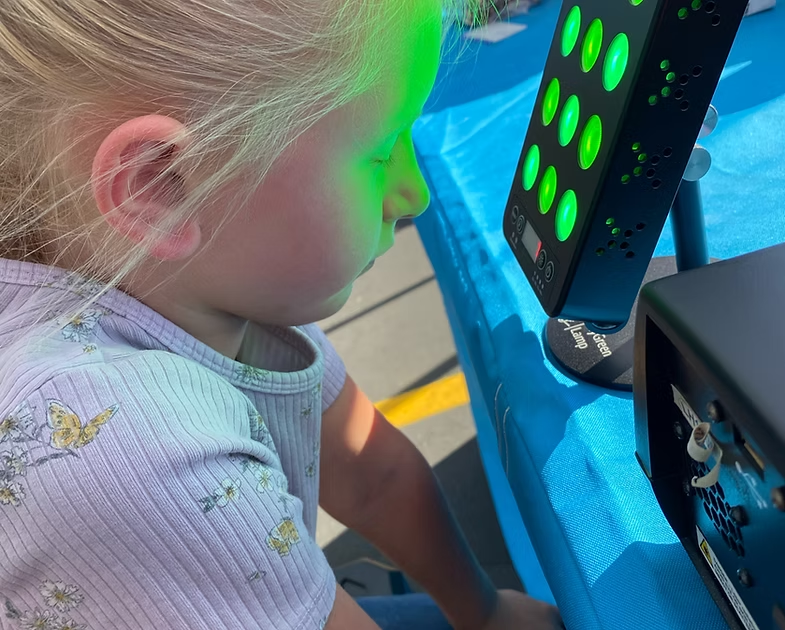
The single most underrated technology in photobiomodulation (or phototherapy) is green light. Despite clinical trials, spectacular case studies and testimonials, and the fact that green light from plants dominates natural, healthy environments, green has escaped the attention of the most famous health & wellness social media influencers. I've already written several articles about the effectiveness of green forest light for pain and anxiety relief on the MyGreen Lamp science blog so I won't repeat too much of that here. It's sufficient to say that research at Harvard and University of Arizona have demonstrated the clinical efficacy of green light phototherapy for rapid migraine headache pain relief without drugs.
Since creating the MyGreen Lamp, I've come to appreciate the health effects for green light on the skin.
The difference between red & green light phototherapy
Every red light device you've ever seen on on socia media uses wavelengths that target an enzyme in the mitochondria called cytochrome c oxidase (CcO). I'll write more about in the section on red light below, but for now it's sufficient to understand that CcO is not the only photosensitive biomolecule in the human skin.
It's probably not even the most important, because that distinction belongs to melanin.
You'll remember from our description of ultraviolet light that melanin is the primary defense against deleterious effects of high-energy short wavelengths of light. That is, melanin is highly photoreceptive and therefore acts as a shield in the skin that helps protect DNA from UV damage. However, melanin absorbs light across a broad spectrum -- not just UV. It also exhibits absorption peaks in green (532 nm) and red (730 nm), which is where things get really interesting.

As much as UVB can be used to stimulate the production of melanin, pulsed green laser light can be used to remove it. For example, researchers in Japan recently used narrowband 505 nm green to decrease pigmentation in human skin (Yoshihito et al. 2025), while Brazilian scientists have discovered that 532 nm green light will shrink melanoma tumors. That is, green light inhibited cancer progression in the skin cells that produce melanin (Haussman et al. 2022 [mice]). At high doses delivered by picosecond-pulsed lasers, 532 nm green is effective for destroying melanin and removing age spots, freckles, and other blemishes from the skin (Friedmann et al. 2022). However, at lower doses the photoreceptivity of the melanin to green light can supply energy to the cell by creating charge gradients that would otherwise be energetically expensive to maintain.
Forest light corresponds to melanin
It should come as no surprise that the shady forests of the world are green. We've already reviewed the fact that chlorophyl in leaves rejects green light, even while using other wavelengths to synthesize carbohydrates from carbon dioxide and water. This is why leaves are green.
What most people fail to understand is that forests light is also rich in red/NIR light. There's even more red/NIR light energy in the forest than there is green! This comes as a surprise, probably because the NIR is invisible, but spectrographic studies of forests all over the world confirm these consistent findings (Endler 1993).

That's right.
The wavelenghths that dominate the shady forest are 532 nm green and 730 nm red/NIR, and these also happen to be the same wavelengths that correspond to absroption peaks in the spectrographic profile of melanin. That means that the forest light absorbed by melanin in the outer layers of the skin will produce electricity that powers skin cells.

This was confirmed in experiments conducted with mice in Japan. When researchers compared several different colors of LED light to see which would close a skin wound fastest, they discovered that green 518 nm was more effective than red 638 nm (Fushimi et al. 2012).
To test this idea for myself, I developed a battery-powered flashlight I call the Forest Skinlight. It is equipped with two 532 nm green and three 730 nm red LEDs, which corresponded to the peak absorption wavelengths for melanin that I could find in the literature . Keep in mind that none of the red light torches for sale anywhere else provide wavelengths that target melanin, because they all target the inferior chromophore CcO.
To test the hypothesis that the Forest Skinlight might speed healing of cuts, scars, wounds or other lesions on the skin, I treated a scab on my arm for ten minutes and compared it to an untreated scab on my leg.
The results were spectacular.

A day after one treatment on my arm, the inflammation was gone. The redness was reduced.
Skin starting growing fast under the scab on my arm, while my leg wound had barely improved at all.
I sent pictures to a wound care nurse, who confirmed what I was observing. The rate of healing of the wound on my arm was rapid, especially compared to my untreated leg.
I'll post a more detailed article with these and other confirmatory findings over at the MyGreen science blog. For now, it's important to recognize that the explosion of interest in red light photobiomodulation is probably just a fraction of the potential of green light.
Amber (590 nm)
Right on the border between red and orange light is the 590 nm wavelength called amber. It's an important wavelength, because it corresponds to the excitation of sodium and is thus released by wood fires.
Experiments in amber light are rare. Nonetheless, two aspects stand out. The first relates to subcutaneous fat and erasure of cellulite, while the second relates to restoration of elasticity in the skin.
Almost ten years ago, researchers discovered that lipid droplets in fat cells could be reduced in size by exposing them to either 505 nm green or 590 nm amber light (Park et al. 2017). These results were confirmed by a group of Korean researchers who found that "590 nm light irradiation significantly reduced lipid droplets by about 45% compared with control" (Choi et al. 2017). These results raise the possibility that amber light could mobilize fat stored just beneath the skin, called subcutaneous fat. When the body is in a state of cold thermogenesis, such as during recovery from the ice bath, the fats released from these lipid droplets could be available for oxidation in brown fat and mitochondria to produce heat. In other words, amber light after an ice bath might help sculpt areas of the body where unwanted subcutaneous fat is found. This hypothesis has yet to be tested.
In one provocative study, thirty days of 590 nm amber LED light was used to remove pigmentation and restore facial skin elasticity in a group of five Brazilian women in their 30's. Even better results were obtained by mixing 75% amber and 25% 850 nm red light (Menezes et al. 2020). The mechanism may be related to suppression of vascular endothelial growth factor (VEGF), thus inhibiting the growth of blood vessels in the surface of the skin involved in melasma -- a hyperpigmentation disorder that results in blotches on the face (Dai et al. 2022).
Red & NIR (620 nm – 1100 nm)
Targeting CcO for increased ATP production in mitochondria
Most photobiomodulation therapy devices available online operate in the red/NIR bands. Research goes back decades, although the explosion in popularity has occurred in just the last ten years. The most popular device wavelengths are 630, 660, 810, 830, 850, and some times longer wavelengths like 940, 980 or even 1060 nm (to reach brain cells).
In my experience, few device manufacturers really have any idea which wavelengths might be effective for what applications. Instead, they look at what competitors are offering, or Chinese manufacturers are advertising, and they choose the same. The general rule of thumb among the digital marketing companies is that more wavelengths (and more power) must always be better.
Scientific data suggests otherwise.
Study of CcO in skin cells reveals that there are only two peak absorption wavelengths in the red/NIR band: 670 nm red and 830 nm NIR. Recalling that longer wavelengths will generally penetrate further, it might be sensible to use 670 nm to target cells a few millimeters from the surface, and the 830 nm to target several centimeters, where muscle, tendon, and ligament injuries can be found.

MyGreen Lamp offers a new product called the Multitissue Torch that produces multiple wavelengths to reach different depths below the skin. It offers one 532 nm green LED to energize the skin surface, and one each 810, 850, 940 and 1060 nm to reach greater depths. In this way, the Multitissue torch is not the best device for any single application, but it can be used for many different applications from treating skin wounds to tendonitis. In future versions, I may reprogram the Multitissue Torch to include 670 nm and delete the 1060 nm, which will improve the efficiency of the device for skin, albeit at the expense of neurostimulation.
Red/NIR phototherapy for preventing sunburn
One of the most fascinating (and sensible) applications of red/NIR light is the protection it provides against sunburn from overdose of UV. Recall that in natural sunlight, the red/NIR part of the spectrum first appears at dawn, followed by the rest of the visible spectrum, then UVA, until finally UVB appears only when the sun is high enough in the sky? That progession means that when outdoors, human skin will typically receive light exposure in the same order: red/NIR, visible (e.g., amber, green, blue), then UVA, and finally UVB. They will also disappear in the same order, with sunset exposure ending again on red/NIR.
Experiments in preconditioning human skin reveal that red/NIR exposures protect the skin against UV overexposure, and low-dose red/NIR exposure following UV exposure helps accelerate healing and resolution of sunburn. Neither blue light nor white light exposure prior to UV exhibit this effect. While most researchers speculate that the mechanisms must involve CcO, it is curious to observe that longer wavelength like 970 nm seem to offer better protection than those like 670 nm, where CcO activation would be at a maximum (Barolet et al. 2016). Nevertheless, it is now clear that any study of UV exposures on human skin that excludes red/NIR exposure both simultaneously and/or as a pretreatment is not representative of natural sunlight conditions.

Biophotons: Sunlight Inside the Body
I first wrote about biophotons in my article sCold Thermogenesis Makes Vitamin D From Biophotons, and it's probably one of the most popular and controversial articles I've ever written -- for good reason. Vitamin D from biophotons is one of those scientific realizations that only makes sense after someone takes the time to explain it. In summary, the reasoning goes like this:
We already know that during cold thermogenesis, brown fat and muscles will consume fats and gluocse to produce heat for defending core body temperature, rather than produce ATP. The result is, of course, emission of invisible FIR light, which is also called heat.
In addition to FIR, it make make sense to you that some other wavelengths are produced as well. In fact, a whole range of wavelengths of light are produced by mitochondria during cold thermogenesis, but they're very difficult to detect because they are inside the body and very little light can escape. That's why this light is called ultraweak biophotons.
Some of the light produced inside the mitochondria that are inside brown fat cells is in the UVB range, and when that light intersects provitamin D, it converts that cholesterol to previtamin D.
The previtamin D produced inside brown fat cells need not necessarily travel through the bloodstream right awat, like Vitamin D produced in the skin, because Vitamin D is fat soluble. That is, in the case of cold thermogenesis the Vitamin D is produced in exactly the place where it can be stored.
Experiments in cryotherapy for multiple sclerosis patients have demonstrated that cold exposure can boost blood concentrations of Vitamin D. Nonetheless, the reality of biophotons often elicits an incredulous response on social media -- until you think about it. Wouldn't it make sense that human populations living at extreme latitudes are equipped to synthesize Vitamin D from cold instead of sunshine during the winter?
Regardless, that's not really the point of this article. There is one more interesting discovery to share.
When researchers sought to measure what visible wavelengths of biophotons were emitted from the fingertips of heathy human subjects, they discovered a peak at the exact same wavelength measured in the spectrographic surveys of the shady forest, 550 nm green.
If you've read this far and that little coincidence doesn't blow you away, then there's probably nothing about photobiomodulation that ever will.

References
Barolet D, Christiaens F, Hamblin MR. Infrared and skin: Friend or foe. Journal of Photochemistry and Photobiology B: Biology. 2016 Feb 1;155:78-85.
Dai X, Jin S, Xuan Y, Yang Y, Lu X, Wang C, Chen L, Xiang L, Zhang C. 590 nm LED irradiation improved erythema through inhibiting angiogenesis of human microvascular endothelial cells and ameliorated pigmentation in melasma. Cells. 2022 Dec 7;11(24):3949.
Endler JA. The color of light in forests and its implications. Ecological monographs. 1993 Feb;63(1):1-27.
Friedmann DP, Timmerman A, Cahana Z. Prospective study of 532-nm picosecond laser for the treatment of pigmented lesions of the face and dorsal hands. Dermatologic Surgery. 2022 Nov 1;48(11):1215-9.
Fushimi T, Inui S, Nakajima T, Ogasawara M, Hosokawa K, Itami S. Green light emitting diodes accelerate wound healing: characterization of the effect and its molecular basis in vitro and in vivo. Wound Repair and Regeneration. 2012 Mar;20(2):226-35.
Gu Q, Wang L, Huang F, Schwarz W. Stimulation of TRPV1 by green laser light. Evidence‐Based Complementary and Alternative Medicine. 2012;2012(1):857123.
Holliman G, Lowe D, Cohen H, Felton S, Raj K. Ultraviolet radiation-induced production of nitric oxide: a multi-cell and multi-donor analysis. Scientific reports. 2017 Sep 11;7(1):11105.
Kaaret P, Tammes S, Wang J, Schnell T, Linderman M, Richey CH, Packard CM, Zhou M, Fuller CA. On the potential of flaming hotspot detection at night via multiband visible/near-infrared imaging. Remote Sensing. 2022 Oct 9;14(19):5019.
Neville JJ, Palmieri T, Young AR. Physical determinants of vitamin D photosynthesis: a review. Journal of Bone and Mineral Research Plus. 2021 Jan 1;5(1):e10460.
Parikh R, Sorek E, Parikh S, Michael K, Bikovski L, Tshori S, Shefer G, Mingelgreen S, Zornitzki T, Knobler H, Chodick G. Skin exposure to UVB light induces a skin-brain-gonad axis and sexual behavior. Cell Reports. 2021 Aug 24;36(8).
Park PJ, Cho JY, Cho EG. Specific visible radiation facilitates lipolysis in mature 3T3-L1 adipocytes via rhodopsin-dependent β3-adrenergic signaling. European journal of cell biology. 2017 Jun 1;96(4):301-11.
Roy A, Pittman M, Saitta ET, Kaye TG, Xu X. Recent advances in amniote palaeocolour reconstruction and a framework for future research. Biological Reviews. 2020 Feb;95(1):22-50.
Wong-Riley MT, Liang HL, Eells JT, Chance B, Henry MM, Buchmann E, Kane M, Whelan HT. Photobiomodulation directly benefits primary neurons functionally inactivated by toxins: role of cytochrome c oxidase. Journal of Biological Chemistry. 2005 Feb 11;280(6):4761-71.
Yang M, Pang J, Liu J, Liu Y, Fan H, Han J. Spectral discrimination between healthy people and cold patients using spontaneous photon emission. Biomedical optics express. 2015 Mar 18;6(4):1331-9.
Yoshihito MI, Yamada T, Omatsu J, Yamashita T, Suzuki S, Takechi T, Ichikawa M, Yamazaki K, Shinichi SA, Yoshizaki A. Inhibitory Effect of 505 nm Green Light Emitting Diode on Melanin Synthesis in Cellular Experiments and a Human Intervention Study. Acta Dermato-Venereologica. 2025 May 15;105:43441.
About the Author
Thomas P Seager, PhD is an Associate Professor in the School of Sustainable Engineering at Arizona State University. Seager co-founded the Morozko Forge ice bath company and is an expert in the use of ice baths for building metabolic and psychological resilience.


Comments